
Integrating smart cabinets in lean manufacturing
A practical framework for connecting access-controlled storage to your ERP and lean production workflows.
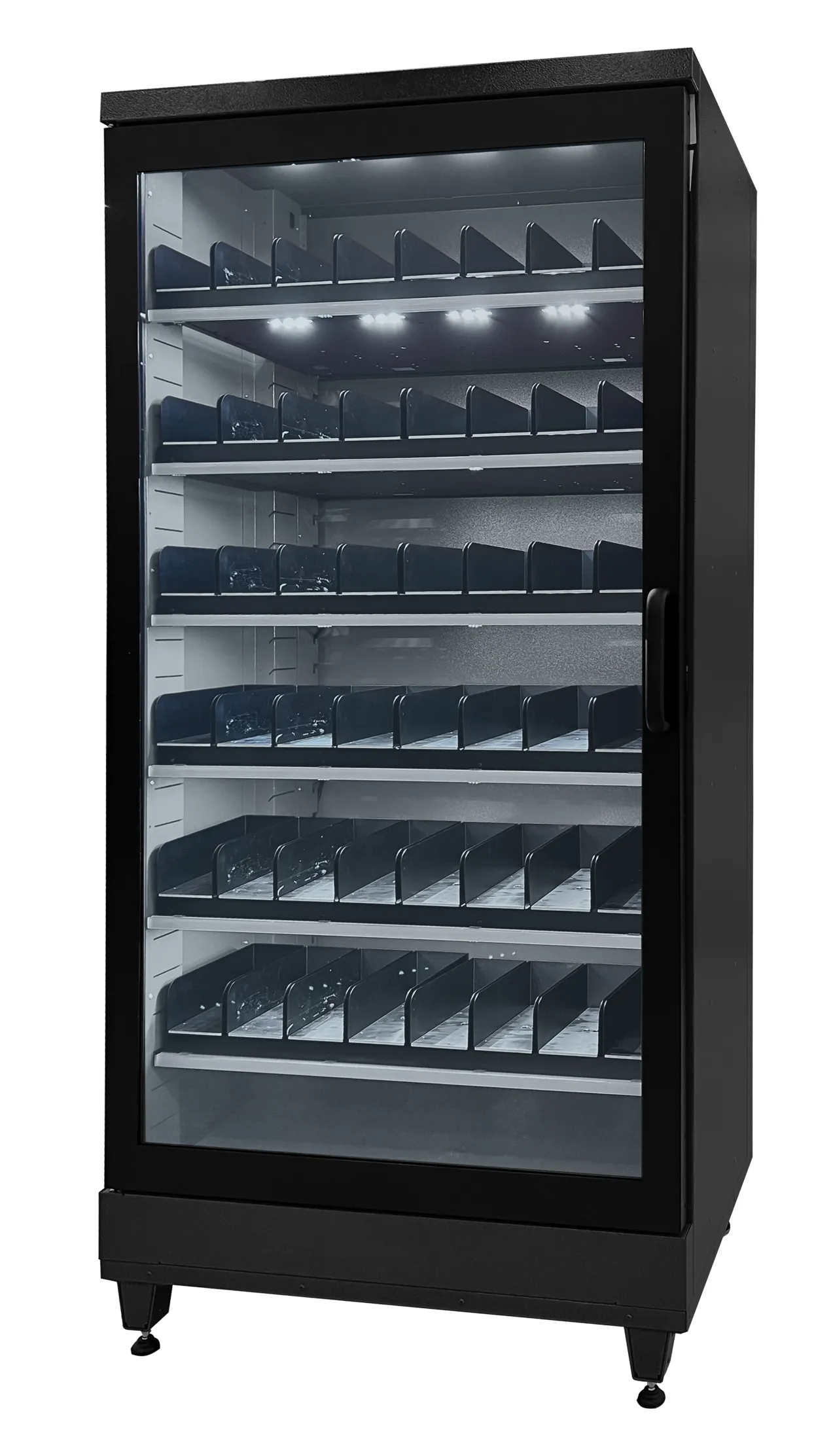
Lean manufacturing eliminated waste from production flow, then left the supply of tools, PPE, and consumables running on paper. This paper provides a practical framework for integrating access-controlled smart storage into lean workflows: where cabinets fit in the value stream, how to connect them to ERP, and how the classic wastes map to physical supply. The outcome is supply that behaves like a lean process: pulled, measured, and continuously improved.
What do we mean by physical supply?
Physical supply includes all the physical items a plant relies on to keep producing: tools, calibrated instruments, PPE, spare parts, and industrial consumables. Automating these flows creates visibility, accountability, and efficiency across the operation. In lean terms: it extends flow and pull beyond materials into everything else people reach for.
Why now?
Skilled labour is too scarce to spend on searching and counting. Compliance expectations around PPE issue and tool calibration keep tightening. And lean programmes themselves have matured: the remaining waste is no longer on the line; it is around it, in the supporting supply flows this paper addresses.
Kanban logic, without cards, and without anyone maintaining it.
The seven wastes, at the tool crib
Every classic waste reappears in physical supply. Waiting: the line stops while a tool is found or a consumable is expedited. Motion: walking to central stores, searching between lines. Inventory: just-in-case duplicates and safety stock nobody trusts. Overprocessing: manual logs, counts, reconciliations, audit ceremonies. Defects: the wrong or uncalibrated tool used because the right one was missing. Transportation: emergency deliveries and internal ferrying between cribs. Overproduction: bulk orders driven by uncertainty rather than demand. A supply flow that generates these wastes is not lean, however lean the line beside it is.
The framework: point-of-use, pull, and proof
First, move storage to the point of use: Smart Cabinets at the line for controlled items (tools, calibrated instruments, PPE), Open Shelf for fast-moving consumables, Pallet Scale for bulk. Motion waste falls immediately; Weight Cell Technology and access control keep item-level truth without adding process.
Second, make replenishment a pull signal: each cabinet enforces min/max levels per item, consumption is measured continuously, and at minimum the system triggers replenishment automatically through ERP integration. Kanban logic, without cards, and without anyone maintaining it. Third, make usage visible: every withdrawal is attributed, every return closes the loop, and Instant Cockpit turns transactions into standard-work metrics: consumption per line and shift, tools out and overdue, slow movers. This is the data continuous improvement runs on.
ERP integration in practice
Integration is what turns cabinets into a system. Master data comes first: items in cabinets are ERP items, same numbers, same units; resist parallel catalogues. Transactions flow outward: withdrawals post to ERP as issues, to order, cost centre, or project, automatically, and costing becomes accurate as a by-product.
Replenishment flows inward: min-level triggers create ERP purchase requisitions or stock transfers, and goods-in updates the cabinet's expected stock. Build once, template everywhere: the pilot integration becomes the template for every subsequent line and site through the platform layer, not a per-site IT project.
Article: Lost tools, lost time, lost money in manufacturing
Why tools disappear, what loss really costs, and how accountability fixes it.
Implementation path
Assessment, Pilot, Roll-out, Optimisation. Baseline the wastes (loss, search time, stockouts, audit hours) at one high-pain crib. Pilot one line for a quarter with fixed metrics. Roll out in templated waves. Optimise quarterly: par levels from measured consumption, assortment per line, purchasing informed by idle-tool analytics, with ISSA giving the team answers directly from live data.
Conclusion
Manufacturers on this path typically achieve continuously accurate inventory, dramatically lower tool loss, hundreds of audit and search hours recovered per year, critical-item stockouts driven towards zero, accurate job costing, and PPE and calibration compliance as a by-product of normal use. Lean taught manufacturing that flow beats batches and pull beats push. Physical supply is the last unreformed batch process on most floors. Connect it, point-of-use storage, pull replenishment, measured usage, one platform, and the plant's supporting flows finally behave like its production flows: visible, accountable, and continuously improving.
Key takeaways
Related articles
Tool controlSmart cabinets vs traditional storage in manufacturing
How automated access control and real-time tracking reduce tool loss and improve shop-floor efficiency.
Read more →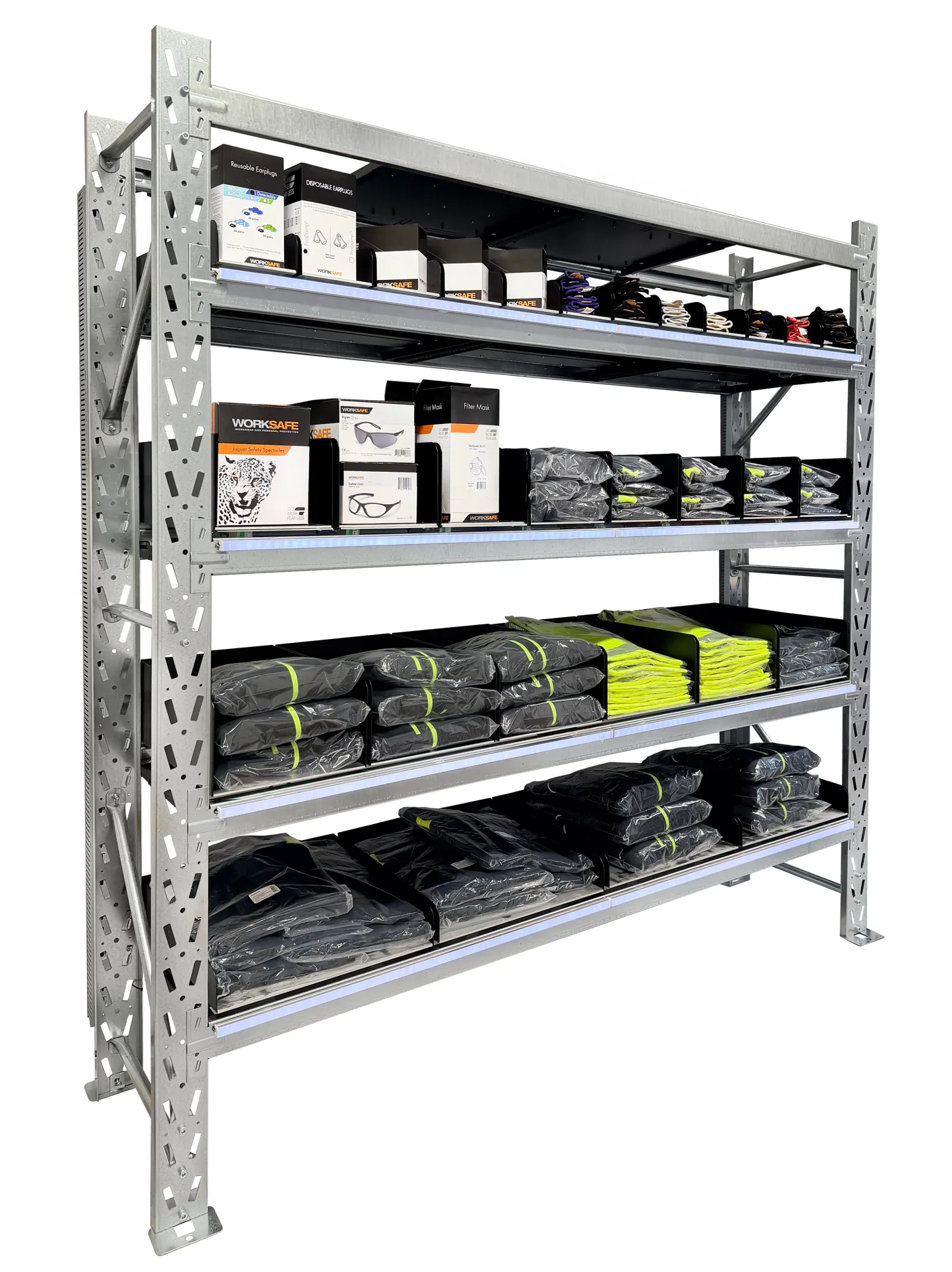 Supply automation
How unexpected stockouts disrupt production schedules
The root causes of supply chain failures and how real-time inventory systems prevent costly downtime.
Read more → Whitepaper
Scaling supply automation: lessons from industry leaders
What separates a successful multi-site rollout from a stalled pilot.
Read more →Stay informed
Get the latest on inventory automation, supply chain strategy, and workplace efficiency.
Ready to automate your physical supply?
Let’s discuss your operational challenges.