
Scaling supply automation: lessons from industry leaders
What separates a successful multi-site rollout from a stalled pilot, with lessons from real deployments.

Most physical supply automation initiatives do not fail at the technology stage; they stall between a working pilot and a scaled deployment. This paper draws on two decades of Instant Systems deployments, today spanning more than 5,900 points of sale, 2 million+ monthly transactions, and 700,000+ users, to identify what leaders do differently in four areas: how they baseline, how they pilot, how they industrialise roll-out, and how they keep improving after go-live. The pattern is consistent across manufacturing, logistics, retail, healthcare, and workplace environments.
What do we mean by physical supply?
Physical supply includes all the physical items organisations rely on to keep operations moving: tools and PPE, food, spare parts, medical supplies, electronics, and industrial consumables. Automating these supply flows creates visibility, accountability, and operational efficiency across the entire organisation. Scaling that automation is the subject of this paper.
Why now?
Four pressures are converging on operations leaders. Labour is scarcer and more expensive, making manual counting and distribution indefensible. Supply chains remain volatile, punishing organisations that cannot see their own stock in real time. Accountability expectations, regulatory and internal, keep rising. And AI-driven operations need live, granular data that manual processes cannot produce. Organisations that automate physical supply now are building the data layer their next decade of operations will run on.
Value is not installed; it accumulates.
Lesson 1: Baseline before anything
Leaders measure the problem before deploying the solution: shrinkage, stockout frequency, audit hours, search time, emergency purchases, working capital in safety stock. Stalled projects almost always skipped this step; their pilots felt better but could not prove anything to a CFO. A two-week assessment producing a per-site baseline is the highest-ROI fortnight in the whole programme.
Lesson 2: Pilot for evidence, not comfort
The successful pattern: one or two supply points, chosen for pain and measurability; fixed metrics agreed in advance; one quarter; real users including the night shift. Typical outcomes in deployments that followed this pattern: tool loss falling dramatically within the first two quarters, shrinkage dropping significantly in the first quarter, stockouts of operational supplies falling sharply, and audit effort collapsing from days to hours. Typical outcomes from comparable deployments; actual results vary by operation.
The stalled pattern: a friendly department, vague goals, no baseline, indefinite duration. The pilot succeeds socially and dies financially.
Lesson 3: Industrialise the roll-out
Scaling is a replication problem. Leaders treat the pilot configuration as a template (product data, user groups, stock rules, integration mappings) and deploy in waves of similar sites, each commissioned and configured remotely through Instant Cockpit. Site visits are for physical installation only; administration is central. A named owner per wave on the customer side keeps decisions fast.
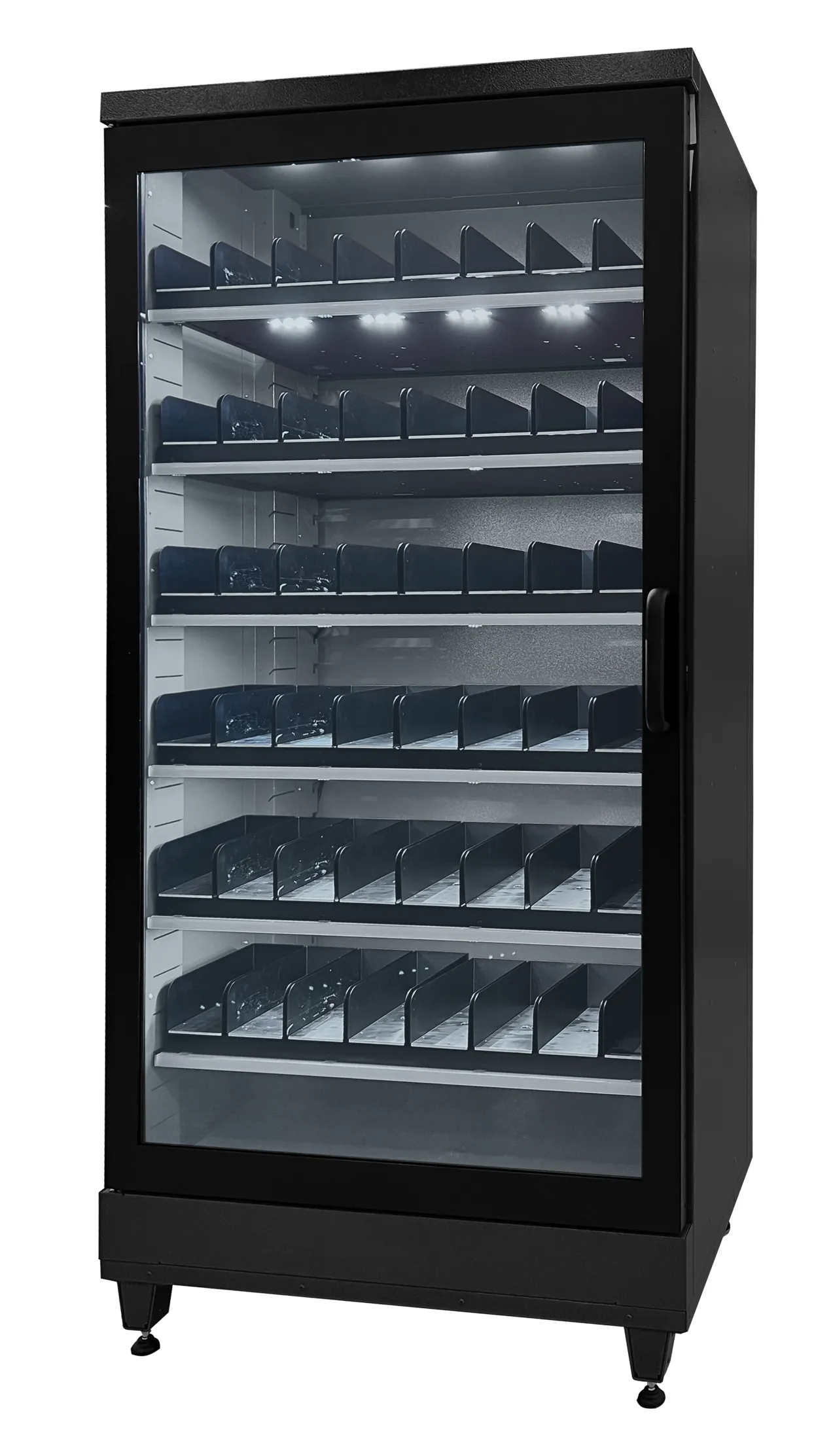
Two structural choices make this possible. One platform for every format: Smart Cabinets, Smart Coolers, Open Shelf, Pallet Scale, and Automated Store formats all run on the same management layer, so a mixed-hardware wave is no harder than the first. And one integration: ERP, WMS, and procurement integration built once at pilot stage replicates across every subsequent site at near-zero marginal cost.
Guide: Planning your rollout
A practical path from first pilot to multi-site deployment, step by step.
Lesson 4: Treat go-live as the start
The deployments with the best five-year economics share a habit: quarterly optimisation against the original baseline. Par levels tuned from measured consumption; assortments reshaped per site; purchasing informed by usage analytics; capability added by software updates to hardware already on the floor; teams querying live data through ISSA rather than requesting reports. Value is not installed; it accumulates.
Conclusion
Organisations that scale on this pattern typically realise higher inventory accuracy, fewer stockouts, lower replenishment costs, reduced shrinkage, better user accountability, higher operational efficiency, and management that scales across locations without scaling headcount. Physical supply is becoming as connected and intelligent as digital workflows. The organisations that scale it successfully do nothing exotic: they measure first, pilot honestly, replicate ruthlessly, and keep optimising. Inventory automation is only the starting point; physical supply automation, scaled across every site, is the next stage of operational excellence.
Key takeaways
Related articles
 Implementation guide
Planning your rollout
A practical path from first pilot to multi-site deployment, step by step.
Read more →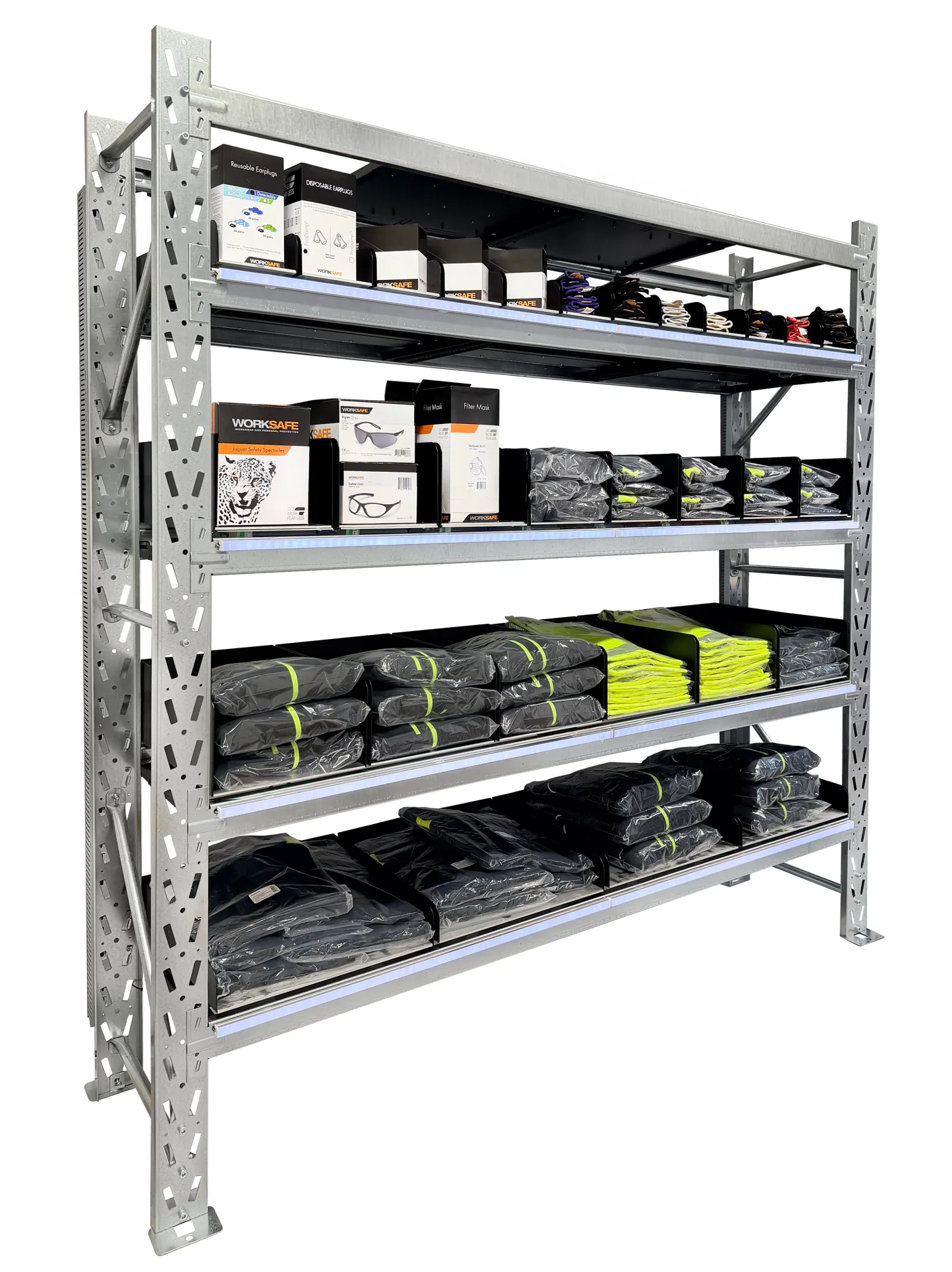 Whitepaper
The ROI of real-time inventory visibility
How reducing shrink, stockouts, and audit time compounds into measurable financial impact.
Read more → Customer proof
How a distributed operator transformed supply operations with automation
An application story about reducing manual inventory work and improving product availability across a distributed network.
Read more →Stay informed
Get the latest on inventory automation, supply chain strategy, and workplace efficiency.
Ready to automate your physical supply?
Let’s discuss your operational challenges.