
From manual counts to real-time visibility
How logistics operations replace audit cycles with connected, autonomous supply.
Most logistics operations still run a familiar regime: scheduled manual counts across the operation, reconciliation marathons, and stock data that is accurate one day per cycle. This paper follows the journey of a typical large logistics operation, a composite drawn from comparable Instant Systems deployments, as it replaces counted storage with connected, self-reporting supply points: the starting state, the decision, the deployment, and the lessons that transfer to any distributed operation. The destination is a regime where audit effort collapses from days to hours, stockouts of operational supplies fall sharply, and planning runs on live data.
What do we mean by physical supply?
Physical supply includes all the physical items an operation relies on to keep moving: PPE, packing materials, tools, spare parts, and industrial consumables. In logistics, these supporting flows rarely appear on a value-stream map, yet a missing item stops the same work a missing machine would.
Why now?
Labour for counting is the hardest to justify in a tight market. Compliance expectations keep rising while audit capacity does not. And every planning ambition, from slotting to procurement, assumes stock data that manual counts cannot supply.
The audit does not get faster; it stops being an event.
The starting state: counting as a way of life
Across a typical operation, operational supplies are counted on a rolling schedule, and the consequences are structural, not personal. Counts consume skilled labour for days per cycle, and the result decays immediately. Between counts, stockouts are discovered by the person who needs the item. Emergency purchases carry premiums and break procurement discipline.
Reconciliation, chasing gaps between the system and the shelf, consumes as much time as counting itself. And teams pad stock just in case, tying up working capital without preventing the next surprise.
The decision: stop counting, start sensing
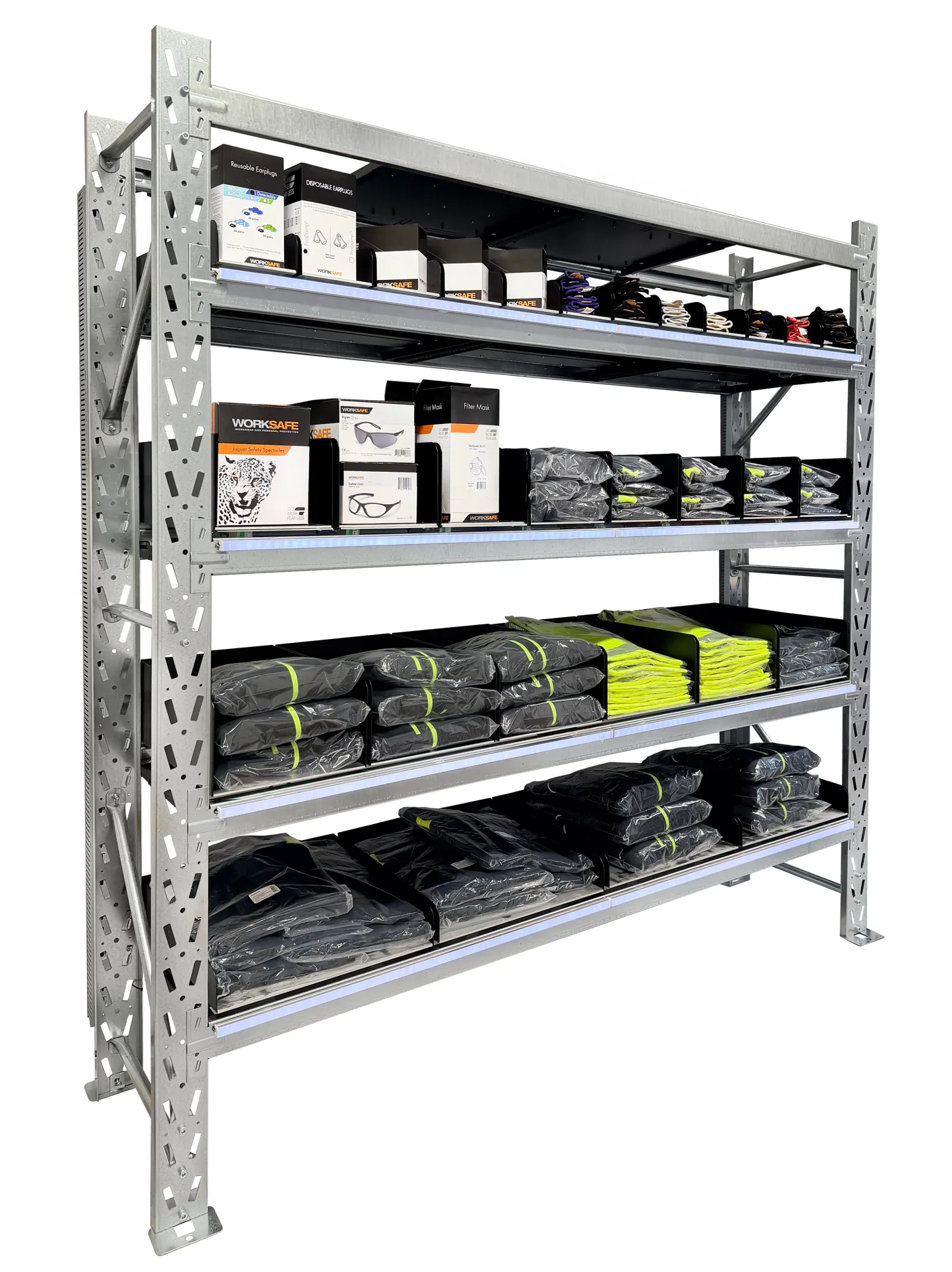
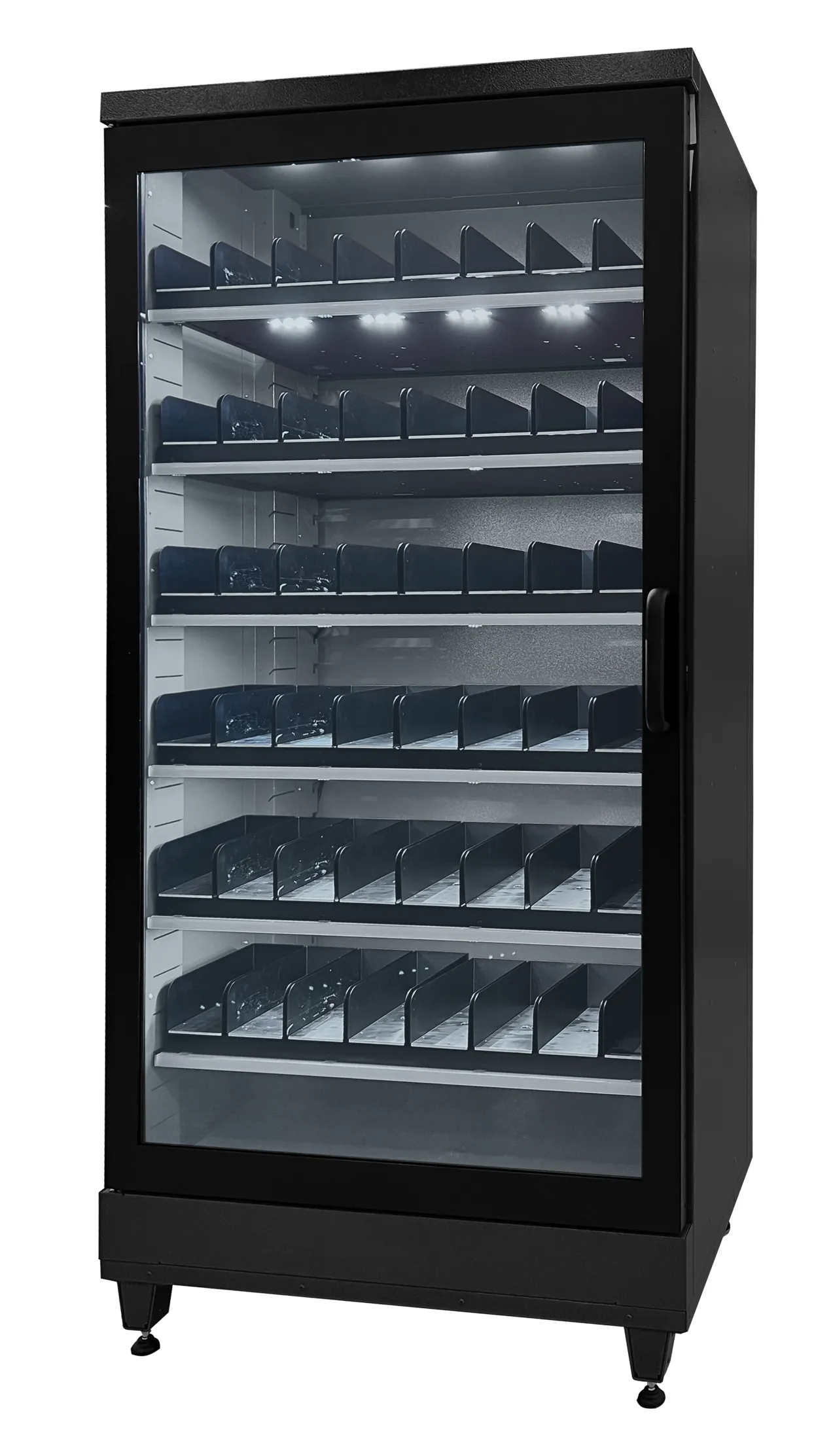
The requirement is deliberately narrow: the shelf must report itself, and the data must land in the systems already in use. The deployment follows the platform pattern: Open Shelf with Weight Cell Technology for fast-moving operational supplies, so people take what they need and the shelf records it; Smart Cabinets for higher-value and controlled items, with every withdrawal attributed to a person; Pallet Scale for bulk materials; Instant Cockpit as the single live view across every supply point, with automatic replenishment triggers into ERP and WMS; and ISSA giving the operations team answers directly from live data.
The implementation
Assessment establishes the baseline: audit hours per cycle, stockout frequency, emergency purchase spend. Pilot instruments the highest-turnover supply points for one quarter; the live data typically exposes wrong par levels immediately. Roll-out templates the pilot configuration across the operation, commissioned remotely. And optimisation continues: consumption data keeps correcting minimum levels as volumes shift with seasons.
Whitepaper: The ROI of real-time inventory visibility
Put numbers on the counting regime: how shrink, stockouts, labour, and working capital compound into a business case.
The typical results
In comparable deployments, audit effort collapses from days to hours, manual counting is eliminated at connected supply points, stockouts of operational supplies fall sharply, emergency purchases are sharply reduced, and stock visibility becomes real-time across the operation; actual results vary by operation. The audit does not get faster; it stops being an event. The system's transaction history is the audit, generated as a by-product of normal use. Compliance reporting becomes a query. And the same live data that ends the counting regime now drives replenishment, so the operation gains availability while removing labour, the combination manual regimes cannot reach.
Lessons for any distributed operation
Baseline first: the improvement is only provable if the old regime is measured before it is replaced. Start where turnover is highest: fast-moving supplies prove the model fastest. Insist on integration: the value multiplies when live stock reaches ERP and procurement, not before. And treat go-live as the start: the largest par-level corrections come from the second and third quarters of consumption data. An operation that makes this move does not buy a counting improvement; it removes the need to count. That is the real meaning of real-time visibility: the question of what is on hand is always already answered, and the operation's attention moves to what to do next.
Key takeaways
Related articles
 Whitepaper
The intelligent layer for physical supply
How connected hardware and software eliminate inventory blind spots across distributed operations.
Read more →BlogSlow audit cycles slow down your entire operation
Why periodic stock audits produce stale data, and how continuous inventory collapses audit effort from days to hours.
Read more → Blog
BlogIndustry 4.0 and the future of supply chains
Why automation is becoming table stakes for operations leaders in manufacturing and logistics.
Read more →Stay informed
Get the latest on inventory automation, supply chain strategy, and workplace efficiency.
Ready to automate your physical supply?
Let’s discuss your operational challenges.